



Which is Better for You: Elliptical or Treadmill?
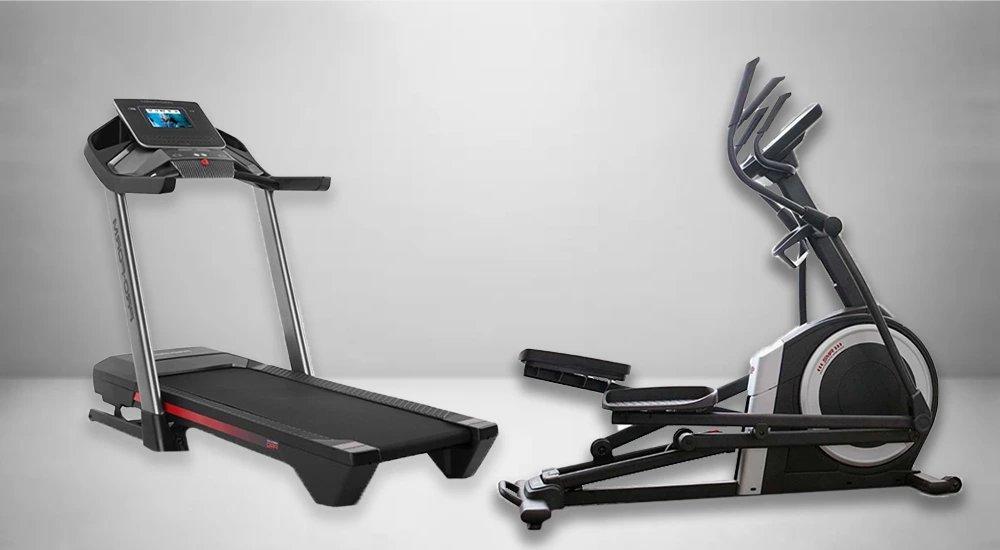
Deciding between an elliptical and a treadmill is a classic question for anyone starting a fitness journey or looking for a new way to cross-train. The right choice for you depends entirely on your specific fitness goals and tolerance for impact level. Both machines excel at burning calories and improving heart health, but their benefits are distinct. To help guide you through your decision, our Experts break down the main differences and benefits of both.
Elliptical: Low-Impact, Full-Body Focus
An elliptical is a popular cardio machine that combines the motions of walking, running, and stair climbing into one fluid, low-impact movement. Due to its design, it's an excellent choice for those just starting out their fitness journey or recovering from an injury as it puts significantly less stress on the knees and joints than running. Unlike most cardio machines, the elliptical allows you to work both your upper and lower body at once, promoting full-body muscle toning and greater calorie expenditure.
Expert Advice | Types of Cardio Machines
Elliptical Advantages
-
Joint Protection: Provides a low-impact workout, making it ideal for maintaining fitness while healing from overuse or lower-body injuries.
-
Full-Body Engagement: The moving handlebars allow you to work your arms, shoulders, and core simultaneously with your legs, leading to a more comprehensive workout.
-
Adjustable Intensity: You can easily increase the workout difficulty by adjusting the digital resistance and the incline level of the ramp to target specific leg muscles like the glutes and hamstrings.
Elliptical Limitations
-
Limited Variety: The core, gliding movement you perform stays the same. The main adjustments are limited to digital resistance and incline, offering less diversity than a treadmill.
-
Supported Motion: Because the movement is fixed and your feet are supported, the elliptical does not provide the weight-bearing stress needed to significantly improve bone density in the same way running does.
Treadmill: High-Intensity, Performance Focus
The treadmill is a powerful cardio machine that simulates natural walking and running, making it a staple for achieving ambitious fitness outcomes. It is the best option if your goal is building strength, maximizing calorie burn, or training for a specific running event. Since running is a weight-bearing exercise, the repetitive motion against gravity helps increase bone mineral density and significantly engages the muscles used for propulsion. By simply adjusting the speed and incline, you can implement high-intensity intervals (HIIT) to burn a high number of calories in a shorter amount of time.
Expert Advice | Treadmill Buying Guide
Treadmill Advantages
-
Performance Training: Offers precise control over speed, distance, and pace, which is essential for structured training plans (e.g., training for a race).
-
Higher Calorie Burn Potential: Running and high-incline walking naturally require more effort than the supported elliptical motion, leading to a greater potential for calorie expenditure.
-
Strength & Bone Density: The high-impact nature of running, combined with adjustable incline, offers superior results for building leg strength and improving bone mineral density.
-
Movement Variety: Allows for three distinct movement patterns: walking, jogging, and running at various inclines, changing the muscle focus and workout intensity.
Treadmill Limitations
-
High Impact Risk: Running is inherently high-impact. Without a high-quality treadmill that provides adequate shock absorption, the repetitive stress can negatively affect the joints over time.
- Note: This is less of a concern when using the treadmill solely for walking.
-
Lower Body Focus: The workout primarily focuses on the lower body. Users need to intentionally add separate upper-body exercises for a balanced full-body routine.
In Summary
The following chart offers a quick overview of the key differences between an elliptical and a treadmill:
| Feature | Elliptical | Treadmill |
|---|---|---|
| Impact Level | Low (Best for joints, injury recovery) | High (Good for bone density) |
| Body Worked | Full Body (Upper & Lower) | Lower Body Primary |
| Calorie Burn Potential | Moderate (Steady State) | High (Running & HIIT) |
| Movement Variety | Limited (One gliding motion) | High (Walk, Jog, Run, Incline) |
| Best For | Joint issues, fitness beginners, general cardio. | Performance training, maximum calorie burn, building bone density. |
Ultimately, both machines are highly effective tools that primarily target your major lower-body muscles, including the hamstrings, quadriceps, hip flexors, glutes, and calf muscles. The most important thing is that you'll be burning calories and improving your overall health using either machine!
For additional information and questions about our cardio machine selection, stop by your local SCHEELS to speak with a Fitness Expert today.